EXCERPT FROM BOOK 2, DRIVEN

Chapter 12
Time Out!
My writing called a timeout. Words stuck in my brain, refusing to spill through my fingertips. At first, I thought my lack of energy was to blame; then I considered whether being old and easily distracted was the cause. Gradually, though, I realized my writing had ground to a halt not long after I ran across an online article published in the August 2016 issue of Vroom Kart International titled, Bill Cowling Jazz Arranger Who Built Karts by Frank Weir.
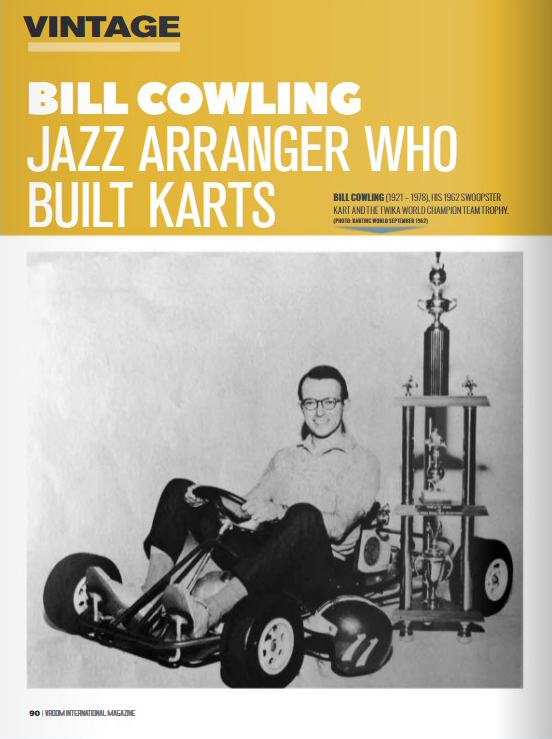
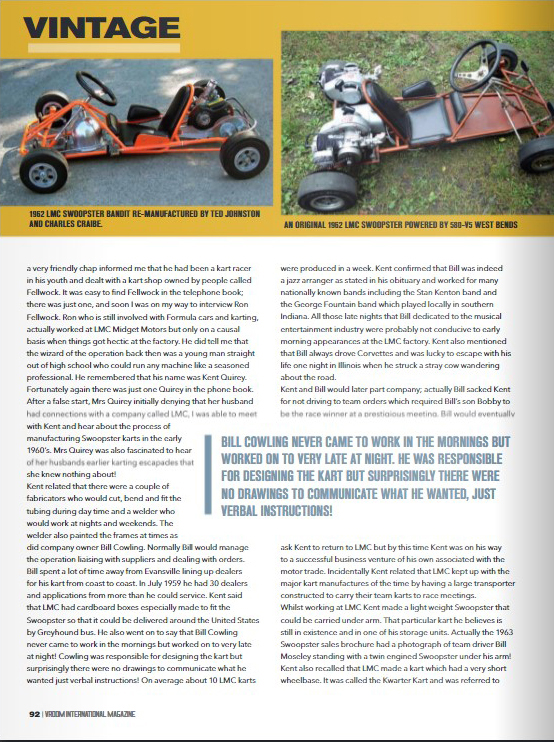
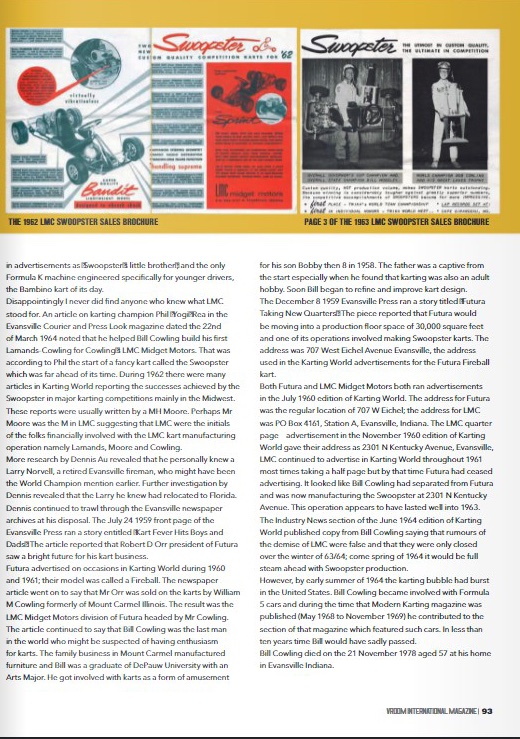
The article’s first page showed a picture of Dad sitting in a Bandit. Other images of Bandits, myself, Billy Moseley (see previous chapter), a reproduction of Dad’s 1962 Swoopster brochure, and a 1,500 word article filled out the four page spread. It took me back.
Frank Weir had gone to Evansville to research LMC Midget Motors. With help from Dennis Au, Historic Preservation Officer for the City of Evansville, Indiana, he uncovered much of the story behind Dad’s company and the Swoopster Bandit. The article provided the following background information:
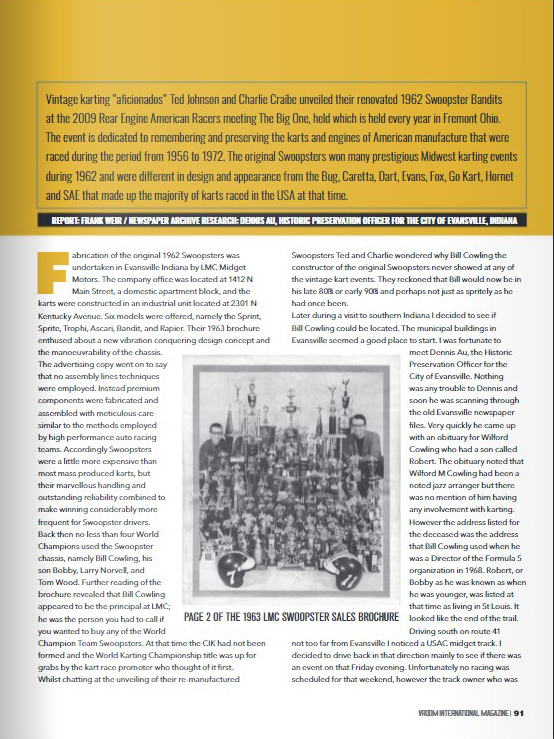
Vintage karting “aficionados” Ted Johnson and Charlie Craibe unveiled their renovated 1962 Swoopster Bandits at the 2009 Rear Engine American Racers meeting The Big One held annually in Fremont Ohio. The event is dedicated to remembering and preserving the karts and engines of American manufacture that were raced during the period from 1956 to 1972. The original Swoopsters won many prestigious Midwest karting events during 1962 (BC: 1960-61) and were different in design and appearance from the Bug, Caretta, Dart, Evans, Fox, Go Kart, Hornet, and SAE that made up the majority of karts raced in the USA at the time.
The article triggered a landslide of images. Kent, the young machinist working for Dad, was described as a “…young man straight out of high school who could run any machine like a seasoned professional.” I remember Kent vividly. Ten years older than me, with a light year of experience separating us, he fascinated me. Yet no friendship developed as it did with other adults at the shop and track. Kent had a bad boy vibe. His quick mastery of whatever he applied himself to, high self-opinion, and quick temper matched Dad’s personality step for step. In the article, Frank diplomatically sidestepped why Kent left the shop. I remember heated arguments between Dad and Kent. Frank described their dynamic as follows:
Kent and Bill would later part company; actually, Bill sacked Kent for not driving to team orders, which required Bill’s son Bobby to be the race winner at a prestigious meeting.
This statement created mystery #1 for me. Kent raced C Class and Super C if he could fit a big enough engine onto his Swoopster 500. I raced Junior class, as far apart as apples and bandsaws. We were never on the track at the same time. Kent didn’t work on my kart. He didn’t hang around our pit area. I can’t imagine anything Kent could do on race day that would affect my racing. I have a shadow memory of Dad firing Kent for not following directions at the shop, which is entirely believable given their history. People are often the most challenging element in any business. Dad could charm people in the short run, but his personality sometimes took a toll on working relationships.
Mystery #2 came from the following quote of Kent’s in the article:
Bill Cowling never came to work in the mornings but worked late at night. He was responsible for designing the kart, but surprisingly, there were no drawings to communicate what he wanted, just verbal instructions!
Surprised the hell out of me. As mentioned earlier in this book, I watched Dad draw the plans for the Bandit, including the aluminum swing mount and other components, which Kent would have machined. All our memories are subjective. I remember going with Dad to Futura’s plant in 1958, where the first Swoopsters were built. Later, Dad described the problems that led to the end of their brief corporate partnership. Might there have been a disagreement over design ownership that made Dad more careful with his plans? Kent was sharp enough, and Dad was sufficiently verbal that I could picture Dad describing what to machine without showing him drawings. I have no doubt those drawings existed.
The article and my memory conflicted. This stopped my flow of words. Once I worked through this chapter, I got back to writing
VROOM ARTICLE